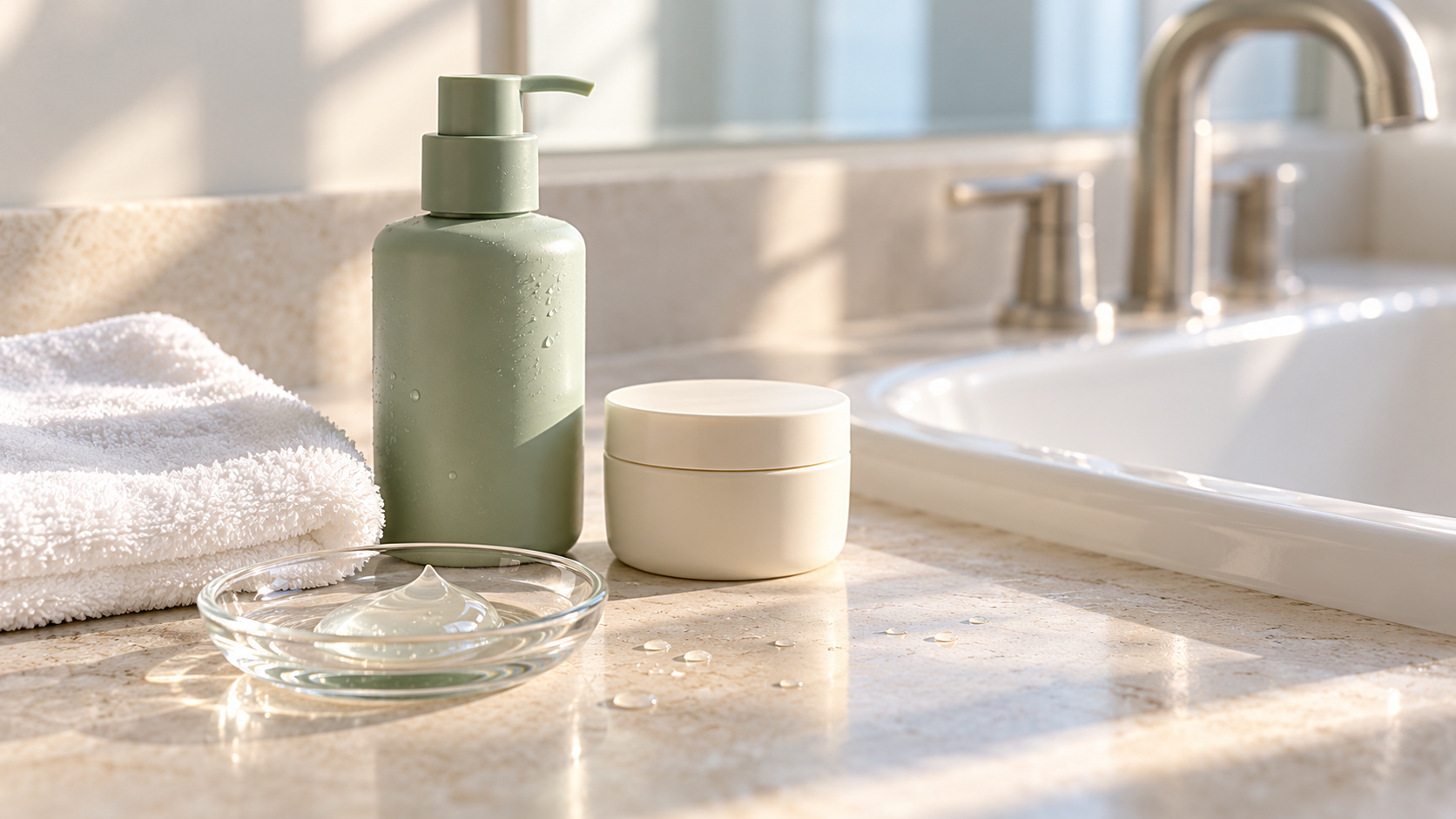
Facial Cleansing for Acne: Gentle Care That Helps
A good facial cleanser can make your daily routine simpler: wash away the day’s buildup, leave your skin comfortable, and give your acne care a gentler starting point. The best choice does its job without leaving your face tight, hot, or stripped.
As a licensed cosmetologist, I understand how important proper cleansing is for healthy skin, especially when acne is a concern. My focus is on removing excess oil, perspiration, makeup, and buildup while respecting the skin’s protective barrier.
That does not require the strongest wash on the shelf or an expensive collection of products. A well-chosen cleanser, a light touch, and a routine you can repeat are useful foundations. Here is how to choose a product that suits your skin, use it well, and recognize when breakouts need more than cleansing.
A few useful label checks can make your next cleanser purchase much easier.
Why the right cleanser matters for acne-prone skin
A cleanser lifts away material sitting on your skin, including surface oil, dirt, and makeup. That makes it a useful part of daily acne care, but acne is more complex than something you can simply wash off.
Breakouts begin in hair follicles, where oil and dead skin cells can form a plug. Bacteria and inflammation also play a part, and hormones can affect oil production. A clean face can still develop acne.
This is why scrubbing harder does not solve the problem. Harsh washing can irritate the skin without treating what is happening inside the follicle. The aim is to remove buildup while keeping your skin comfortable.
There is some evidence that mild, non-alkaline cleansers can help acne-prone skin, but the research on cleansing alone is limited. NICE includes them in general skin-care advice rather than presenting them as a stand-alone acne treatment. Think of your cleanser as a useful daily foundation, with targeted treatment added when needed.
What makes a facial cleanser a good choice?
Start with a gentle, non-abrasive facial cleanser. A soap-free product with a skin-friendly pH is a practical choice; NICE recommends non-alkaline synthetic detergent cleansers, often called syndets. They come as liquids, foams, and cleansing bars, so a bar is not automatically harsh.
Look for noncomedogenic or “won’t clog pores” labeling. These are useful shopping clues, though no label can promise that a product will suit every person. If your skin is dry or easily irritated, a fragrance-free formula is a sensible starting point.
Choose a texture you enjoy using. A light gel may feel pleasant on oily skin, while a creamy wash may feel more comfortable on dry areas. Judge the whole formula by how it cleans and how your skin responds; foam level alone does not tell you whether a cleanser is gentle.
Skip gritty scrubs and products that leave you stinging. Price is not a measure of suitability, either. A simple, affordable cleanser that rinses away well and feels comfortable can be a better fit than an elaborate product with a long list of claims.
How to wash without overworking your skin
The American Academy of Dermatology advises gentle washing up to twice daily and after sweating. Morning and bedtime are useful anchors. Avoid adding washes every time you notice a little shine.
Start with clean hands and lukewarm water. Apply your cleanser gently with your fingertips, following its directions. You do not need a rough cloth, cleansing brush, or gritty scrub to make the wash worthwhile.
Rinse thoroughly, including around the nose and hairline, then pat dry with a clean towel. Avoid rubbing over active spots. At bedtime, remove makeup; if a separate remover is needed, use it gently and follow with your facial cleanser.
Finish with a noncomedogenic moisturizer that suits your skin. Oily skin can still become dry or irritated, especially during acne treatment. In the daytime, include broad-spectrum SPF 30 or higher sun protection that will not clog pores.
If you use prescribed acne medicine, follow its instructions for timing and application. Your cleanser should fit that plan. Persistent burning, peeling, or tenderness is a reason to review the routine with your clinician.
When an acne wash or other treatment may help
A plain cleanser cleans the skin. A medicated acne wash also contains an ingredient intended to treat acne. That difference matters when deciding what belongs in your routine.
Salicylic acid helps unclog pores and can be useful for blackheads and whiteheads. Benzoyl peroxide reduces acne-associated bacteria and can help inflammatory pimples. Both can cause dryness or irritation, so follow the product label rather than assuming a stronger formula or longer washing time will work better.
If you already use a leave-on acne treatment, you may prefer a plain gentle cleanser. Adding several medicated products at once makes it harder to tell which one helps or causes irritation. Ask a pharmacist or dermatologist how a new wash fits your existing treatment.
Give a tolerated acne treatment time to work; early improvement often takes six to eight weeks. Seek medical advice sooner for deep, painful lumps, scarring, or acne that affects your well-being. Those are reasons for a treatment plan, not more vigorous washing.
Questions you may have about cleansing and acne
Can washing my face prevent acne completely?
No. Cleansing helps remove surface buildup and supports a consistent care routine, but it cannot control every cause of acne. Hormones, oil production, plugged follicles, and inflammation can still lead to spots. If you wash gently and continue to break out, the next step may be an acne treatment rather than a stronger cleanser. Keep the wash comfortable, avoid picking, and seek advice if breakouts persist or become painful. Cleansing is one part of care.
Should I wash oily skin more than twice a day?
Usually, repeated washing throughout the day is not helpful. A morning-and-evening routine, plus washing after sweating, follows dermatology guidance without turning every trace of oil into another cleansing session. Scrubbing or washing too often can irritate your skin. If you remain very oily, review your products and acne treatment with a dermatologist instead of steadily increasing wash frequency. Oil is a normal part of skin; removing every trace is neither realistic nor the goal of cleansing.
Is an expensive cleanser better for acne?
Not necessarily. A higher price does not tell you whether a cleanser will suit your skin or treat your type of acne. Look at its purpose, its formula, and how your skin tolerates it. A mild everyday cleanser and a medicated wash do different jobs, even when their packaging looks similar. Choose a product you can comfortably use and afford to replace. Spend on a suitable routine, rather than expecting a premium bottle to deliver a cure.
Should my face feel tight after washing?
Tightness is not proof that a cleanser worked better. It can suggest that the product, hot water, or repeated washing has left your skin too dry. Try a gentler formula and lukewarm water, and use a suitable moisturizer afterward. Also consider whether acne medicines or other products are contributing to dryness. If the tight feeling comes with persistent stinging, redness, or peeling, get advice rather than adding exfoliation. Comfortable skin is a more useful goal than a squeaky finish.
Do I still need moisturizer if I have acne?
Yes, acne-prone skin can benefit from moisturizer, especially when treatment makes it dry. Choose a noncomedogenic product and a texture that feels comfortable; a lightweight lotion may suit oily areas better than a heavy cream. Apply it as part of your routine, following any instructions for your acne medicine. Moisturizer does not replace acne treatment, but it can help you manage dryness. If a particular product seems to worsen your breakouts, reassess that formula rather than ruling out all moisturizers.
Build a routine your skin can feel comfortable with
Good facial cleansing for acne starts with a suitable product and a gentle touch. Remove daily buildup, support your skin with moisturizer, and let targeted treatment do the work a cleanser cannot.
Thank you for spending a few minutes on this everyday step. You can build a useful routine without making it complicated: choose thoughtfully, stay consistent, and get extra help when your skin needs it.